Why Trust the Bible?
This article was written as part of the March 2026 Perspective Journal. There are a dozen ways—even a dozen excellent ways—we might answer a question like “Why trust the Bible?” …

January 1, 2026 • Aaron Menikoff
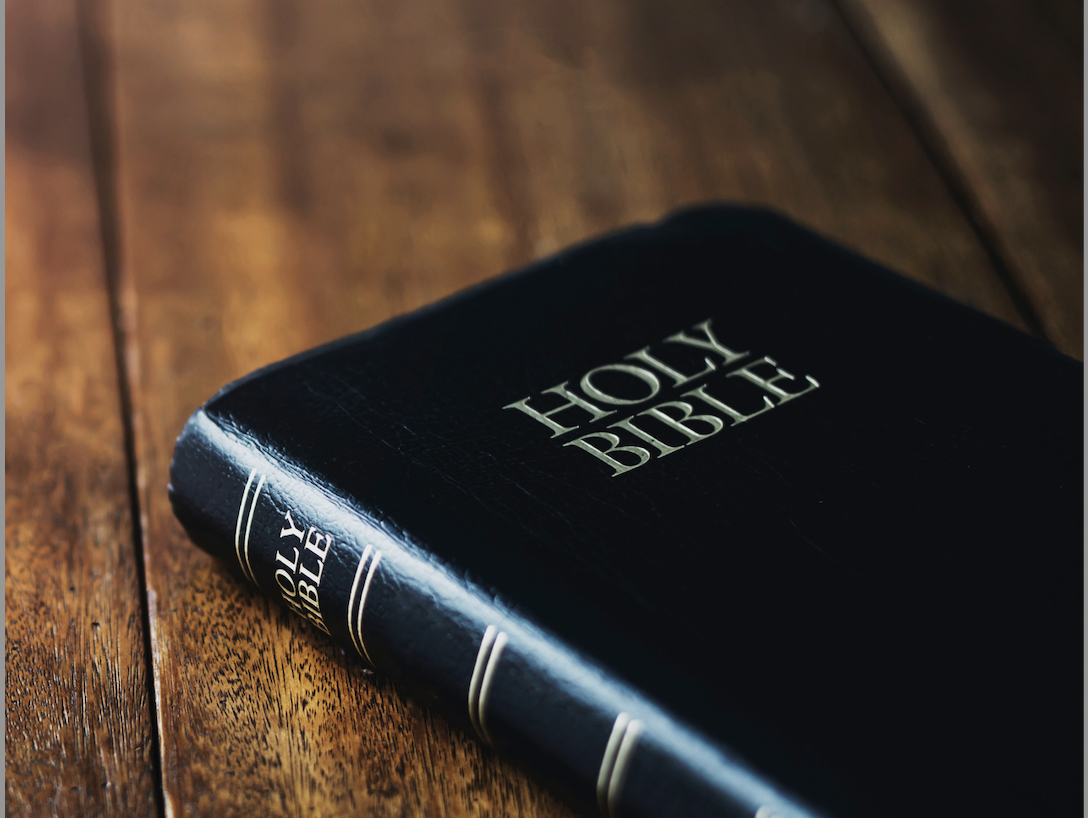
Two men in their late twenties sat in the middle of a church fellowship hall, surrounded by a few older, seasoned pastors. Both wanted to be ordained into pastoral ministry, which meant submitting themselves to a series of questions by elders their church had invited into the process.
When my turn came, I asked them a softball question, or so I thought: Why do you believe the Bible is the Word of God? The young men, in different ways, stumbled to provide a coherent response. Though they loved God very much, though they loved Scripture a great deal, and though they had even been to seminary, they clearly hadn’t thought very deeply about the Bible as Scripture. I have no doubt they knew much of what the Bible said, but they struggled to articulate what the Bible is. I left that meeting surprised and, honestly, a little discouraged.
We are fond of saying that we are a people of the Book. Scripture is the bedrock of our life. The Bible is not God to us, but it is how we learn of his character and his plan of redemption.
We can, of course, learn a great deal about God simply by examining the world he made. David says in Psalm 19, “The heavens declare the glory of God, and the sky above proclaims his handiwork” (v. 1). Christians have understood this to mean we can discern the reality of God and even his glory from the ground beneath our feet, the stars above our heads, and everything in between.
Paul added, centuries later, that creation points us in a Godward direction: God’s “eternal power and divine nature, have been clearly perceived, ever since the creation of the world, in the things that have been made” (Rom. 1:20). The apostle wanted us to know there is enough knowledge about God in creation to make us rightly accountable—we are “without excuse”—but there is not enough knowledge in creation to save us.
We need the Bible.
For many years now, the elders of Mount Vernon have decided to pick a theme, a subject our church can focus on for the year. We don’t print any banners. We aren’t trying to distract the church from the ordinary and essential task of working through books of the Bible, chapter by chapter. Nonetheless, we think it prudent to pick one topic to explore in articles like this, Wednesday night classes, Sunday schools, and, yes, maybe even in a Sunday morning sermon or two.
We focused on the subject of biblical manhood and womanhood this past year, a particularly timely topic. We live in a world where our non-Christian neighbors struggle to define “male” and “female” or “masculinity” and “femininity.” We gave attention to these issues and many more questions related to God’s wisdom in creating us male and female. In previous years, you may recall, we dove into topics like corporate worship, prayer, and work and rest. Go back even further, and you’ll find we devoted a year each to thinking about how our church can have a culture of disciple-making, evangelism, family ministry, generosity, and serving other churches.
These yearly emphases are not required, but they have served to sharpen our thinking in ways that have benefited our church and, I hope, you as well.
This year, our focus is the Bible. That’s it: the Word of God. Shouldn’t this be our focus every year? Absolutely, and in one sense, it is. Not only do we strive to begin every service with the reading of Scripture, but we build every Sunday morning service around one passage from the Bible. Furthermore, the vast majority of our Sunday School and Equipping Matters courses are simply teaching times walking through the Bible. Even in our small groups and one-on-one discipling relationships, Scripture is always being unpacked and applied.
Yes, we are a people of the Book, and the Bible is our perennial theme.
And yet, I wonder: are there questions about the Bible you might struggle to answer well?
I can’t guarantee we are going to cover all of these questions this year, but we’ll come close. By answering these questions, I want to lead us to think well about the Bible—not just what it says but what it is. Or, to put it another way, I want us to see what the Bible says about itself. We should be a church that is well-equipped both to understand the Bible and to communicate what it is to those around us.
I want to convince you that you don’t have to check your brain at the door to believe the Bible really is the inspired, inerrant, authoritative, and sufficient Word of God. Not only that, I want you to be thrilled about the Bible.
Let’s think about that for a moment—being thrilled to hear God speak to you in Scripture.
Long ago, in a galaxy far, far away, I dated the woman who is now my wife, Deana. Back in college, I spent a summer studying Russian at Moscow State University in Russia. That same summer, she worked for a Christian mission at Yellowstone National Park in Wyoming. We had neither a cell phone nor an email account.
Still, we wanted to talk. Young and in love, we desperately wanted to hear each other’s voice. My dormitory had one phone. She needed to use a payphone outside the restaurant where she worked. We had to navigate both a ten-hour time difference and the fact that making an international phone call in the early ’90s was expensive! Somehow, we made it work. Through letters (only some of which made it through), we coordinated a time to talk. We dipped into our savings, and twice that summer we enjoyed a brief conversation. We were thrilled to hear each other’s voice.
I want you to be thrilled to hear the voice of God as he speaks to you through his Word, the Bible. I’m convinced you’ll be even more thrilled when you are better equipped to answer the kinds of questions posed above. It is one thing to hear the voice of a parent, child, pastor, or friend. But it is another thing entirely to know that the Creator of the universe has revealed himself to you in his Word. That should thrill you. My prayer is that this Year of the Bible at Mount Vernon will help.
Let’s start with a little history.
Mount Vernon’s Statement of Faith begins with an article called “The Scriptures.” It’s just a paragraph long:
The Holy Bible was written by men divinely inspired and is God’s revelation of Himself to man. It is a perfect treasure of divine instruction. It has God for its author, salvation for its end, and truth, without any mixture of error, for its matter. Therefore, all Scripture is totally true and trustworthy. It reveals the principles by which God judges us, and therefore is, and will remain to the end of the world, the true center of Christian union, and the supreme standard by which all human conduct, creeds, and religious opinions should be tried. All Scripture is a testimony to Christ, who is Himself the focus of divine revelation.
Much of this paragraph tells us what Scripture is about and what it is like. Perhaps the line that gets closest to a definition is found at the end of the first sentence: “The Holy Bible . . . is God’s revelation of Himself to man.” What is the Bible? The Bible is the words God has chosen to make himself known to us.
Let’s go back in time and look at an even older statement of faith. The London Baptist Confession of Faith was written in 1677. It also begins with an article on Scripture. Here is paragraph one:
The Holy Scripture is the only sufficient, certain, and infallible rule of all saving knowledge, faith, and obedience (2 Tim. 3:15–17; Isa. 8:20; Luke 16:29, 31; Eph. 2:20); although the light of nature, and the works of creation and providence do so far manifest the goodness, wisdom, and power of God, as to leave men inexcusable; yet are they not sufficient to give that knowledge of God and His will which is necessary unto salvation (Rom. 1:19–21; 2:14–15; Ps. 19:1–3). Therefore it pleased the Lord at sundry times, and in diverse manners, to reveal Himself, and to declare that His will unto His church (Heb. 1:1); and afterward for the better preserving, and propagating of the truth, and for the more sure establishment and comfort of the church against the corruption of the flesh, and the malice of Satan, and of the world, to commit the same wholly unto writing (Prov. 22:19–21; Rom. 15:4; 2 Peter 1:19–20); which makes the Holy Scriptures to be most necessary, those former ways of God’s revealing His will unto His people being now ceased.
Does this long paragraph give us a straightforward definition of the Bible? Not really, though we learn a lot about the Bible:
Amazingly, this long paragraph is just the first of ten paragraphs devoted to the topic of Scripture in the London Baptist Confession. What do the other paragraphs say?
The second paragraph simply lists the books of the Bible by name. The third paragraph clarifies that the Apocrypha (found in Roman Catholic Bibles) is not the inspired Word of God. Fourth, we have the Bible not because of a decision made by the church but as a gift from God to the church. Fifth, we finally come to see the Bible as God’s Word through the activity of the Holy Spirit—though the Bible is obviously and self-evidently a majestic, even heavenly, book. Paragraph six states that though everything we need for “salvation, faith, and life” is found—directly or indirectly—in the Bible, it is also true that we can regulate our “worship of God, and government of the church” with wisdom according to “the general rules of the Word.” Seventh, what must be known and understood in the Bible is clear to all, “not only the learned, but the unlearned.” In the eighth paragraph we are told that though the Bible came to us in Hebrew and Greek, it is good for them to be translated into common languages. Ninth, we need the Bible to interpret the Bible. That is to say, hard passages should be interpreted by those that are clearer. Tenth, and finally, all “controversies of religion” find their “supreme judge” in the Holy Scripture.
Statements of faith like this do a great job of describing the nature, attributes, or usefulness of Scripture. The authors didn’t seem keen on boiling down a definition of the Bible into one sentence. This may be because the moment we talk about the Bible, there is so much that needs to be said!
For example, the Bible is a form of revelation. I’ve already touched on the two ways God reveals himself. The first is known as general revelation. This is God’s revelation of himself through nature to all mankind everywhere. There is real knowledge of God to be found in the world that he has made.
Though this knowledge cannot save us, it’s important to affirm that anyone can look at creation and know there is a God. In fact, I would go a step further and say that because everyone is made by God, they do know that God exists. And if they deny it, they are simply, as Paul put it in Romans 1:18, “suppressing the truth”—truth they know through general revelation. By examining the cosmos and by examining our own hearts, we know God exists. The external and internal world bear witness to a Creator.
But as we seek to define the Bible, our interest is not in general revelation. We are concerned about special revelation. Over time, God has made himself known uniquely to his people. It is his unique disclosure of himself to a particular people that makes this revelation “special.”
The author of Hebrews captured this in the opening verses of that book: “Long ago, at many times and in many ways, God spoke to our fathers by the prophets, but in these last days he has spoken to us by his Son, whom he appointed the heir of all things, through whom also he created the world” (vv. 1–2).
Comb through the pages of the Old Testament and you’ll find God revealing himself through Moses, David, Isaiah, and many other prophets of old. In many cases, they saw God act in ways we would call miraculous. In some cases, they had visions and dreamed dreams. This is special revelation. And when they wrote down what they saw under the guidance of the Holy Spirit, that is special revelation, too.
The Apostle Peter knew that the writings of these Old Testament prophets were actually the writings of God. But Peter said God did not stop communicating with the prophets. He raised up apostles to show how all of the prophets of the Old Covenant spoke about the Christ of the New Covenant.
Peter recognized that these prophets of old served the church—the church established in Peter’s day. Peter put it this way: “It was revealed to them that they were serving not themselves but you, in the things that have now been announced to you through those who preached the good news to you by the Holy Spirit sent from heaven, things into which angels long to look” (1 Pet. 1:12). According to Peter, both the prophets of old and “those who preached the good news to you”—the apostles—worked under the guidance of the Holy Spirit of God. God revealed to them what God wanted them to know and share. Again, this is special revelation.
Christopher Morgan marveled at the work of the Holy Spirit in the lives of the authors of Scripture:
God the Holy Spirit moves the writers of Scripture as they speak from God. The Spirit so directs the writers that they speak for God. The words of Scripture are not the products of human will alone. They are also the very words of God, for by his Spirit he guides the writers so that they write his Word.1
Whenever God broke into history to make himself known—whether in a cloud of fire at Mount Sinai or through a miracle at the wedding at Cana—God was specially revealing himself. All these are a form of special revelation. But the special revelation that concerns us today is Holy Scripture, the Bible. The Holy Spirit, as Morgan helpfully stated, led the prophets and apostles to record exactly what God wanted us to know about himself. This is a miracle! Without losing their creativity or personality, these authors gave us God’s perfect Word.
About this Word, two things must be said. First, the Bible comes from God. That is to say, it is inspired. The text to study is 2 Timothy 3:16: “All Scripture is breathed out by God.” The Greek word translated “breathed out” is where we get the word “inspiration.”
According to Michael Reeves, confidence in inspiration gets to the core of what it means to be an evangelical, a gospel-believing Christian: “The reason why evangelicals treat Scripture as their supreme authority is because it is the word of God. In other words, evangelicals believe in what is traditionally called the ‘inspiration’ of Scripture.”2
The idea is simple enough. God spoke it. He made his truth come to pass through the pens of those who wrote down this revelation of God. Think of it this way: just as Jesus is truly man and truly God, so it is with Scripture. The Bible is truly penned by human authors while simultaneously truly being a divine Word.
Second, the Bible is the Word of God. Of course, this must be the case if the Bible comes from God. But we need to say more than that. We need to say that these sixty-six books of the Bible are God’s Word for us. J. I. Packer, in his book “Fundamentalism” and the Word of God, presents a wonderful description of the Bible worth repeating in its entirety. You’ll be tempted to read over it quickly. Let me encourage you to slow down. If you are a Christian, your daily life is dependent on this truth:
The biblical concept of Scripture, then, is of a single, though complex, God-given message, set down in writing in God-given words; a message which God has spoken and still speaks. On the analogy of scriptural usage, therefore, it is evident that to describe Scripture as the Word of God written is entirely accurate. Accordingly, if when we speak of the “Bible” we mean not just a quantity of printed paper, but a written document declaring a message—if, that is, we view the inspired volume as a literary product, a verbal expression of thought—then “the Bible” and “Scripture” will be synonyms: it will thus be correct to call the Bible the Word of God, and to affirm that what it says, God says.3
Now we are closer to a definition. The Bible is the Word of God written. The Bible is Scripture, God’s words that we find in the sixty-six books of the Bible and that speak to us whenever the Bible is read to us. This Book is of divine origin—it is inspired by God. And having been inspired, it is the Word of God—totally trustworthy because it is without error. In fact, it cannot have error, for were it to be mistaken, that would make God mistaken. But God, who is perfect, cannot be wrong.
God, who is perfectly good, has kindly revealed himself in nature (general revelation). However, God has graciously revealed himself in Scripture (special revelation). He did not have to, but he chose to show us the path to everlasting life through his holy, inspired, and inerrant Word. When we open up the pages of our Bible, we hear directly from God.
What, then, is the Bible? Here’s a place to start: the sixty-six books of the Bible are the written Word of God that perfectly, sufficiently, authoritatively, and finally reveals to us God and his ways, especially regarding the eternal life found in Christ alone.
This definition clarifies that by “Bible” I am referring specifically to the sixty-six books you find in the Bible sitting in your lap (or the one you scroll through on your screen). Why these sixty-six books is a topic for another day. It is a “written” Word. God has made himself known in words—words that have been recorded, words that can be read, meditated upon, and preached. These words are the revelation of God the Father.
And because God is God, and he is absolutely perfect (Deut. 32:4; 2 Sam. 22:31; Ps. 18:30; 145:17; Matt. 5:48; James 1:17; 1 John 1:5), his word is perfect, too (Ps. 19:7; Prov. 30:5; Isa. 40:8; Matt. 5:18; John 10:35; 2 Tim. 3:16–17; Heb. 4:12).
But to say that God’s Word is perfect is not some abstract statement. It means we can rely on it completely. This is what those statements of faith I looked at earlier were getting at. Do you remember how the London Baptist Confession began? “The Holy Scripture is the only sufficient, certain, and infallible rule of all saving knowledge, faith, and obedience.” The first thing these Baptists wanted to say about the Bible is that it provides everything we need to know to live a holy life. Sure, the Bible doesn’t tell us what we need to know to fly an airplane. But it doesn’t claim to tell us that! It does tell us everything we need to know to be a godly husband or wife, a faithful parent or friend, an honest employee, or a reliable church member. The Bible is sufficient.
It is also authoritative. By definition, the Bible is to be obeyed. It is not a book like any other book. Not all the books I own demand my allegiance. The Bible does. When God spoke through Moses to the people of Israel, he did so that the people might keep his commands (Deut. 6:1–2; 30:14–16). And when his successor, Joshua, led the people into the Promised Land, his message was simple: “do not turn” from God’s Word (Josh. 1:7–8). The Word Jesus gave his disciples was not to be ignored (Matt. 7:24–27; John 14:23–24). And the Word recorded by the apostles had to be kept by every Christian (1 John 2:3–5). The Bible is not merely a Word to be admired or even adored; it is a Word to be obeyed.
Furthermore, we should expect no more revelation from God. He has spoken. The church is built on the foundation of the apostles and prophets (Eph. 2:20). That unique ministry of writing down God’s Word is complete. Expect no more apostles, no more prophets, no more words from God.
Finally, I’m convinced a proper definition of the Bible should include a reference to its chief end: to bring everlasting life to sinful creatures through the atoning work of Christ on the cross. Jesus himself asserted he is the point of the Bible (Luke 24:27, 44–46; John 5:39). The New Testament is a record of Jesus’ own teaching (John 14:26). Paul said all of God’s promises culminate in the God-man, Jesus Christ (2 Cor. 1:20). Yes, the Bible speaks perfectly, sufficiently, and authoritatively about everything it addresses. God’s will is not limited to salvation! Nonetheless, the Bible is a book focused on Christ and the life to be found in him alone.
William Tyndale famously translated the Bible into English in the sixteenth century. This may not sound like a big deal to you, but for many years, the Roman Catholic Church refused to allow for the Bible to be translated into languages the people could read for themselves. They preferred the sacred book to be read in Latin; they made the Bible a book for the church authorities alone to use.
However, around 1522, Tyndale decided this book needed to be in the hands of ordinary Christians to read, understand, and profit from. He met opposition from church leaders in England, which caused him to flee to Germany. Neither the priests nor even King Henry VIII wanted Tyndale’s English Bible. They didn’t want the Bible in the common tongue. The church authorities did not want the people to possess a Bible that would lead them to question the teaching of the Roman Catholic Church.
As a young man, Tyndale had come to appreciate the Reformation spreading under Luther’s influence. He knew Greek, saw these Reformation principles in the Greek text, and he wanted them to be made available to his English-speaking brothers and sisters. Tyndale set to work on his translation after making this comment to a church leader who opposed him: “I defy the Pope and all his laws. . . . If God spare my life ere many years, I will cause a boy that driveth the plow shall know more of the Scripture than thou dost.”4
By 1526, he quietly shipped English New Testaments back home. Consider how remarkable this would have been. For generations upon generations, people could only get the Latin Vulgate, the Bible in a language few could even understand. Tyndale translated much of the Old Testament, too, and his work became the foundation of the Bible finally authorized by King James in 1611. Translations like “Let there be light” (Gen. 1:3) or “Am I my brother’s keeper?” (Gen. 4:9) or “Fight the good fight” (1 Tim. 6:12) first came from Tyndale’s pen.5
Tyndale lived long enough to see friends of his who embraced his translation burned alive for possessing the English Bible. For Tyndale, getting the Bible into the hands of people was a gospel issue. The Word of God needed to be proclaimed, and to be proclaimed, it needed to be spread in its entirety. Tyndale rightly believed that God spoke so that people would hear, and hearing, believe, and believing, follow Christ—even to the point of death. Writing to a friend who lost his life for possessing an English Bible, Tyndale said, “Your cause is Christ’s gospel, a light that must be fed with the blood of faith.”6
At the age of 42, having never married and still exiled from his homeland, the authorities came for him. In October of 1536, after already spending eighteen months in prison for his Reformed faith and Bible translations, he was tied to a stake, strangled to death, and then burned.
Nearly 490 years after Tyndale’s death, it seems good for us to spend a year giving special emphasis to the Bible he lived and died for. The sixty-six books of the Bible are the written Word of God that perfectly, sufficiently, authoritatively, and finally reveals to us God and his ways, especially regarding the eternal life found in Christ alone.
By Aaron Menikoff
Recommended Resources